Home
Sayyid. Shaykh. Sulaiman bin Abdurahmaan
1777–1859
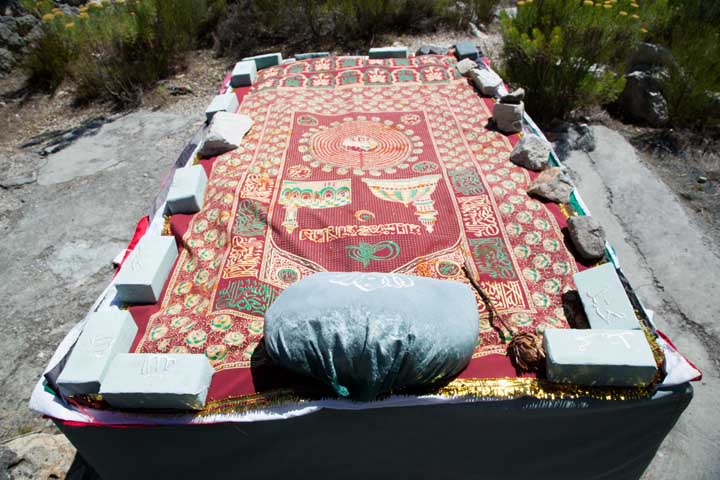
"Learn your lineages so that you can maintain ties of kinship. For keeping ties of kinship brings love among the relatives, increases wealth, and extends one's lifespan."
Sunan al-Tirmidhi, 1979
Brief
Shaykh Sulaiman, buried at Bainskloof Pass near Cape Town, came from Makkah, Arabia with his family. He arrived at the Cape after being banished by the Wahhabi movement and remained to assist in the spread of Islam. It is believed that either he, his father, or his grandfather served as an Imam at the Haram in Makkah.
Travels
Shaykh Sulaiman was banished from Makkah in 1807 for opposing Wahhabi rule. His journey took him through:
- Muscat, Oman
- Goa, India
- Banten, Indonesia
- Uitenhage, South Africa (1816)
- Cape Town, South Africa (1817)
He was married to Regina van Batavia, also known as Sabbarah, and later to Jabila van de Kaap. He was also a candle maker.
Location
- Address: Bainskloof Pass, Wellington, 7655
Coordinates: -33.5797222, 19.135 - Google Maps: View location
Sayyid Status
Evidence from oral tradition, preserved Arabic scrolls, DNA testing, and archival confirmation establishes that Shaykh Sulaiman was a Sayyid—a descendant of Fatima (RA), the daughter of the Prophet Muhammad (SAW).
Below are seven key points that support this status:
-
Worcester Family Scroll – An Arabic sanad (with translation) held by the Worcester line traces the family directly back to Sayyida Fatima (RA), the daughter of the Prophet Muhammad (SAW).
- Scroll 1 (Arabic) – held by the Worcester line
- Scroll 1 (English Translation)
-
Wynberg Family Scroll – A parallel scroll within the Wynberg line confirms the same lineage back to Sayyida Fatima (RA).
-
Oral Tradition Across Lines – When descendants from different branches met, despite being strangers to one another, they independently confirmed that their elders had passed down the knowledge that the family descended from Ahmad ibn Ali al-Rifāʽī, founder of the Rifaʽi ṭarīqa and descendant of the Prophet Muhammad (SAW).
-
Confirmation from Madinah (1960s) – A letter from Sayed Ghazi Bhafaqi of Madinah to Sietie Salama Bhyat (née Sadan), granddaughter of Shaykh Sulaiman, affirmed the family’s origins from Medina and their Sayyid lineage.
-
DNA Matches with the Aswat Family – DNA testing confirmed a common ancestor with the Aswat family of India. Archival references show that the surname Aswat is historically linked to the family of ʿAlī (RA), directly supporting the family’s Sayyid claim.
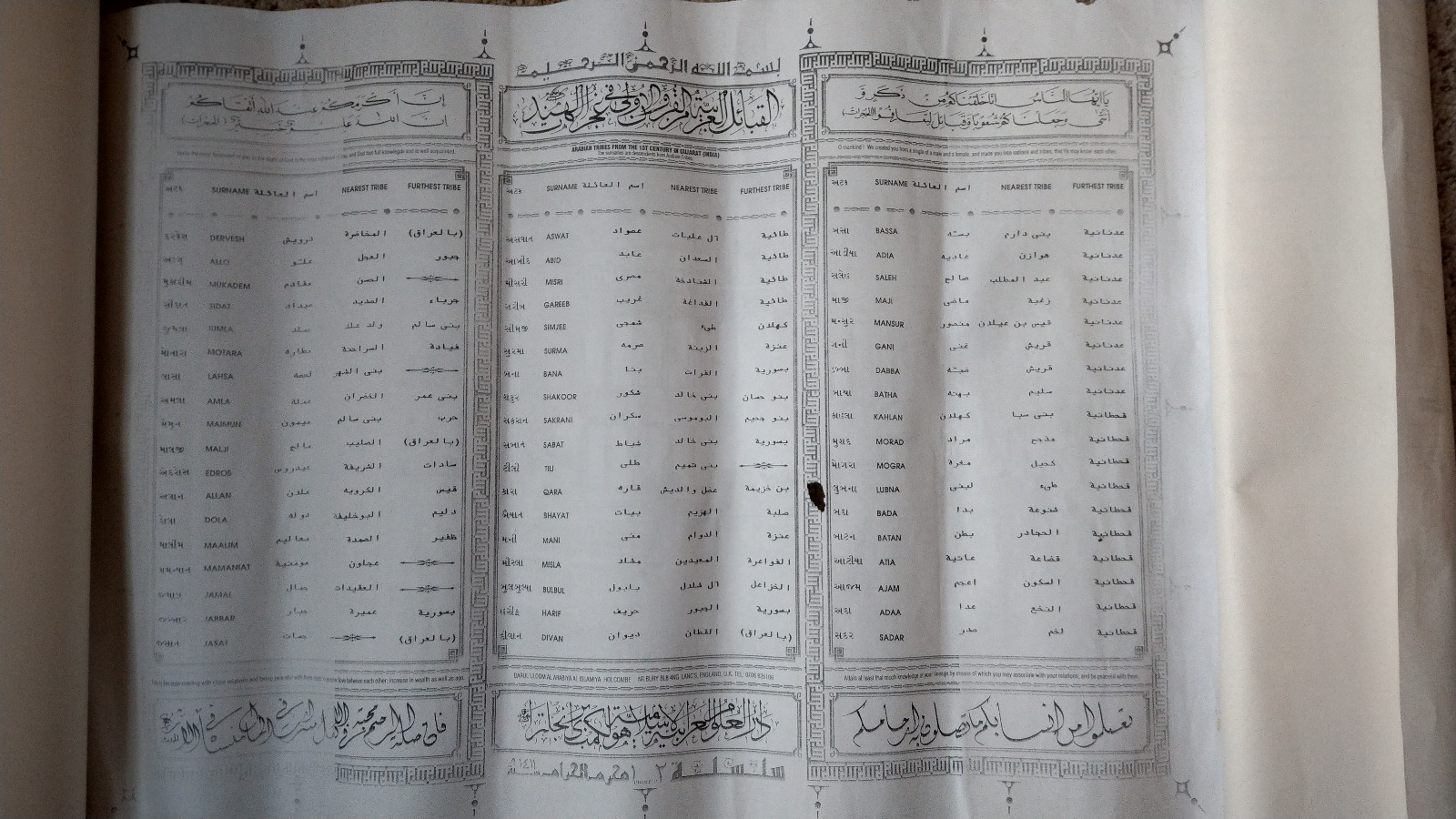
Caption: Book reference showing the surname “Aswat” linked to the family of ʿAlī (RA) -
Consistent Oral History – Across all three main lines (Worcester, Wynberg, and Claremont), elders have always referred to the family as Sayyids, preserving the claim through generations.
-
Death Notices and Archival Records – Official Cape archival records list Shaykh Sulaiman as Sheikh Sulaiman Abdurahmaan / Sheikh Sulaiman van Arabia. His sons’ death notices explicitly record him as their father, corroborating the oral and documentary tradition of Sayyid descent.
Rediscovery & Miraculous Continuity
The rediscovery of Shaykh Sulaiman’s story and identity was not simply an academic exercise — it carried a deeply miraculous quality.
-
For generations, many descendants across Cape Town and beyond were searching for the truth of their ancestor. In some cases, family members even reported dreams guiding them toward his story.
-
Nowhere else in the world (as far as we know) do the surnames Slamang, Slamong, Slemang, Slemmen, and Sedan/Sadan exist. All of these are simply variations of the same surname, created through colonial misspellings and Cape Malay linguistic influence.
-
If Shaykh Sulaiman had carried a fixed surname in the Western sense (for example “ABC”), then every one of his descendants today would likely share that single surname. Instead, what began as errors and adaptations produced a cluster of unique names — and in doing so, preserved a trail back to him.
-
What seemed like a misfortune at the time became a blessing: these unusual surnames created a trail through archival records. Although the process took years of scanning, cross-checking, and verifying, the very uniqueness of the names made the task possible.
This context helps descendants appreciate how remarkable the survival of this history truly is. Despite exile, colonial erasure, and scattered branches of family, the legacy of Shaykh Sulaiman endured through oral memory, records, and even dreams — until it was confirmed in our generation by both DNA and archival evidence.
Descendants
Patrilineal Family Tree (password required; ask a family member to demo the tree)
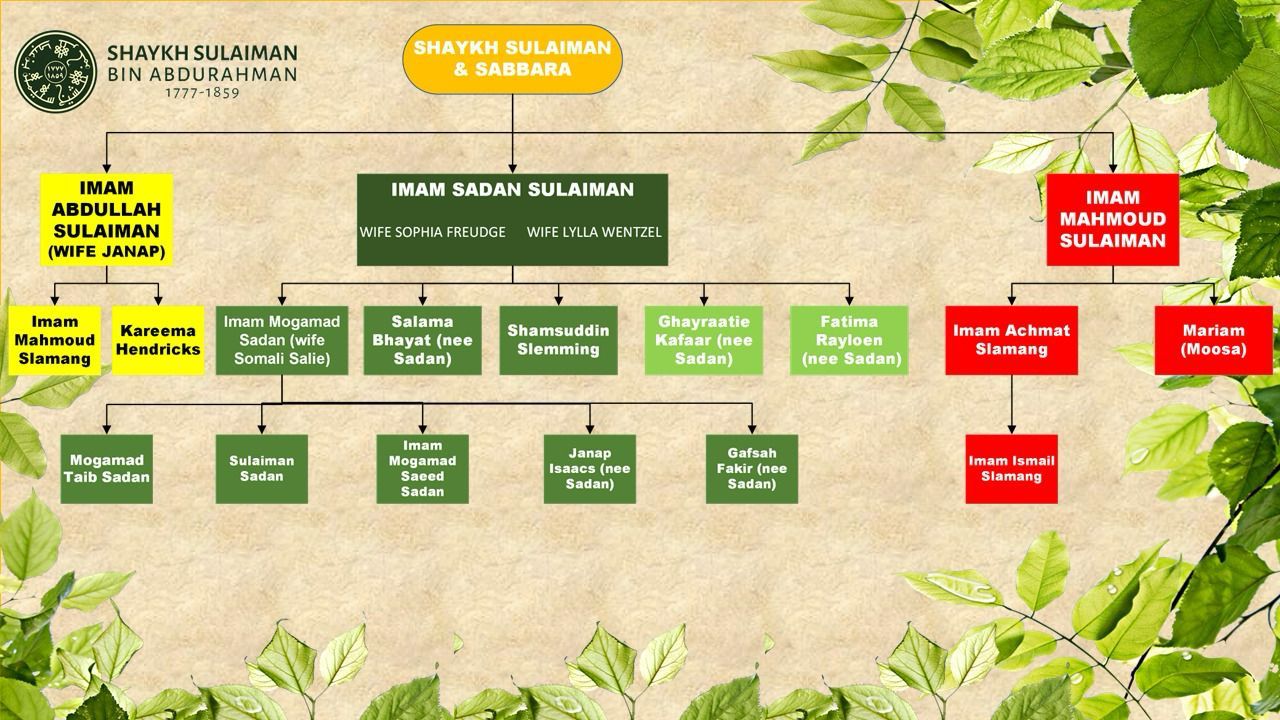
Caption: This guide should help any descendant identify which son they descend from.
Anyone with the surname Slamang, Slemman, Sedan, or Sadan—primarily in Cape Town—can trace their lineage to Shaykh Sulaiman through oral history and DNA evidence.
He had three sons with Sabbarah. Sons (1) and (2) were twins:
- Imam Sadan – Worcester Line
- Imam Abdulla – Claremont Line
- Imam Magmoed – Wynberg Line
All three lines have confirmed DNA matches, verifying a shared ancestor from the early 1800s—supported by historical and oral records.
Grandchildren
These are the oldest known individuals closest to Shaykh Sulaiman for whom we have photographs.
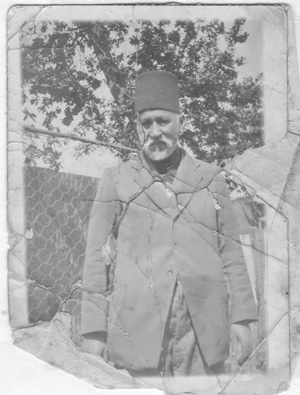
Caption: Grand-son - Imam Magmoed Slamang (1st Imam of Stegmaan Road Masjid in Claremont) son of Abdullah
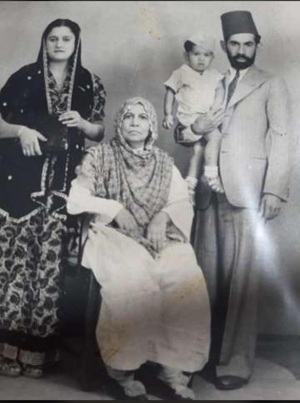
Caption: Likely taken in 1946 in India (Surat or Kholvad). Pictured left to right: Bibi Fatima Bhyat (née Dinath), her mother-in-law Salama Bhyat (née Sadan), baby Ahmad Bhyat, and Goolam Hossain Bhyat, who was born in India and reunited with his mother around 25 years after emigrating to South Africa at age 9.
DNA & Oral Legacy
The identity of Shaykh Sulaiman Abdurahmaan, buried at the Bainskloof Kramat, was preserved for generations through oral tradition. A mysterious grave near the bridge at Bainskloof has long been believed to be his final resting place.
Thanks to the combined efforts of family elders, DNA testing, and archival research, this history is now supported by both scientific and documentary evidence.
Confirmed Lineages
Below is a summary of one direct line from each of Shaykh Sulaiman’s sons. These lines were selected because the descendants at the end have completed DNA tests confirming their lineage.
| Worcester | Wynberg | Claremont |
|---|---|---|
| Imam Sadan Sulaiman | Sayed Magmoed Sulaiman | Imam Abdulla Sulaiman |
| Imam Mogamad Sadan | Sayed Achmad Slamang | Imam Magmoed Slamang |
| Taib Sadan | Imam Ismail Slamang | Abbas Slamang |
| Abubaker Cedick Sedan | Magmoed Slamang | Mohammed Kassiem Slamang |
| Jamiel Alwie Sedan | Ebrahim Slamang | Nathmie Slamang |
| Anver Sedan | Kausiem Slamang |
DNA tests across descendants of the Sadan/Sedan, Slamang, and Slemming/Simmins families confirm a shared male ancestor — aligning perfectly with oral accounts passed down through each line.
To be explicit, DNA results confirmed that Anver Sedan, Kausiem Slamang, and Nathmie Slamang all share a common paternal ancestor dating back to the early 1800s — consistent with oral history, archival records, and written documentation linking their families to Shaykh Sulaiman.
Supporting Accounts
Official death notices of Imam Sadan Sulaiman and Imam Abdulla Sulaiman both name their father as Sheikh Sulaiman Abdurahmaan, sometimes recorded as Slyman Abdorragman or Sheikh Sulaiman van Arabia. These align with oral traditions collected from elders across all three family lines.
One key oral history comes from Hadjie Salma Jacobs (née Sadan) — daughter of Hadjie Mogamad Taib Sadan, also known as Boeta Tape. She recounted that Imam Sadan Sulaiman helped establish the Worcester Mosque on Durban Street, and preserved stories of his father — Sheikh Sulaiman — being exiled from Makkah for speaking out against the Saudi king, and that he once served as an Imam at the Haram in Makkah.
Together, these oral and archival records confirm what many knew in their hearts — that Shaykh Sulaiman's legacy lives on not only through names and stories, but through tested bloodlines and verified history.
Additional Note on Tribal Lineage
The discovery linking the Aswat surname to the family of ʿAlī (RA) is more than a DNA confirmation. It highlights how Arab surnames historically connected families to their tribes, preserving lineages across centuries. This context adds further credibility to the oral traditions and family scrolls passed down through generations.
Connection with Tuan Guru
The families of Shaykh Sulaiman and Tuan Guru remained closely connected across generations. A notable example: Ahmed Abdola, a descendant of Tuan Guru, passed away in 1918 at the home of Imam Mogamad Sadan in Worcester.
Historical Timeline
A summary of key dates in the life and legacy of Shaykh Sulaiman and his descendants.
- 1777: Birth of Shaykh Sulaiman bin Abdurahmaan
- 1807: Exiled from Makkah; begins journey across Arabia, India, Java, and South Africa
- 1819: Birth of twin sons, Imam Sadan and Imam Abdulla
- 1859: Death of Shaykh Sulaiman; buried at Bainskloof Kramat
- 1875: Imam Sadan settles in Worcester
- 1878: Completion of Worcester Masjid
- 1885: Death of Imam Abdullah (Son)
- 1888: Death of Imam Sadan (Son)
- 1923: Death of Imam Mogamad (Son)
- 2021: DNA testing confirms shared paternal ancestry between (Worcester) and Slamang (Wynberg) families
- 2024: DNA testing confirms shared ancestry between (Claremont) Slamang and the Worcester and Wynberg lines, finalizing research that aligns with both oral and written records
Archival Records
This section lists only some of the many verified archival documents related to Shaykh Sulaiman’s family, including official death notices and property deeds. These records provide historical confirmation of family members, dates, and locations.
🕊️ Death Notices
-
Sedan Soleman
- MOOC 6/9/258, Ref. 1088
-
Abdulla Slemman
- MOOC 6/9/235, Ref. 1236
-
Mohamed Sadan
- MOOC 6/9/2456, Ref. 1164
📜 Deeds of Transfer
- No. 273 — 20 June 1860
- No. 263 — 9 August 1881
- No. 798 — 26 October 1881
- No. 258 — 21 October 1889